Algorand NFT creator's 2023 essay casts generative PFPs as the Ship of Theseus
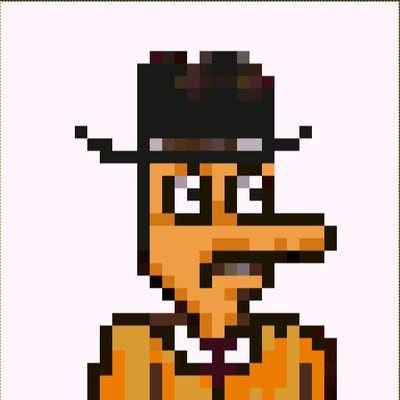
The Ancient Paradox, Rebuilt in Pixels
In 75 BC, Plutarch recorded the story of the ship on which Theseus and the youth of Athens returned from Crete — a vessel the Athenians preserved for centuries by removing decayed planks and 'putting in new and stronger timber in their place.' Eventually, every original part had been replaced; what remained was the idea, the form, and the name. The paradox that follows — is a thing so rebuilt still the same thing? — has since been aimed at human bodies and minds, and at governments and companies whose members and structures are wholly exchanged over time.
More than two millennia later, an Algorand NFT creator writing as HMP argues that generative profile-picture (PFP) collections are a perfect modern Ship of Theseus. The essay, 'Why a Generative PFP NFT Collection is a perfect Ship of Theseus', published April 5, 2023, on Medium, is a five-minute read tagged NFT, Identity, Community, Algorand, and Philosophy. The author's bio describes him as the creator of the Hampelman NFT series and the Mori coin, 'working out of the Woodshop on the Algorand blockchain.'
What a Generative PFP Actually Is
A generative collection starts with a base body or a single idea — an animal, a person, a fantastical creature — and a set of traits. A randomness algorithm shuffles those traits into thousands of variations, so every minted piece is unique yet visibly descended from one source. On Algorand, that structure has a precise technical footing: a non-fungible token is an Algorand Standard Asset (ASA), a native layer-1 asset created in a single transaction without a smart contract, carrying a URL field that usually points to the artwork on IPFS, the content-addressed decentralized storage network. Because each mint is one cheap transaction — typical fees are fractions of a cent — assembling a collection in the thousands is trivial.
When HMP describes a PFP collection as 'pure blockchain assets pointing to IPFS-hosted images,' he is describing Algorand's standard mechanism, not a metaphor. The ledger itself behaves like the ship, too: each block finalizes and replaces the last without forking, so the chain remains a single continuous record whose contents change completely over time.
Case Study: Skuli Frens
The essay's case study is Skuli Frens, a community-based project on the Algorand blockchain that HMP describes as having an unknown artist, no central authority, and all proceeds and profits flowing back to the community. The collection's image is a pixelated body with a skull-like head, and the essay breaks it into four tiers.
| Concept | Real-World Implication |
|---|---|
| 969 Skuli Frens, generated from 70 assorted traits | The main body of the ship: hundreds of near-copies of one concept, each wearing a different trait combination |
| 477 Skuli Gals | The female counterpart tier — a second large group under the same shared identity |
| 1,400 Skuli Pets | The largest tier, stretching the collective beyond the humanoid figures |
| 51 Fun Frens | The more exclusive segment, adding deliberate scarcity to a community-centered project |
The essay addresses the Frens and Gals together, describing them as totaling 1,400 NFTs — though those two tiers' own figures (969 plus 477) actually sum to 1,446. A small arithmetic slip in a piece otherwise careful with its central metaphor.
Identity Chosen, Not Assigned
If a community is one collective body, HMP argues, the Frens are its replaceable parts — 'semi-identical instances of an idea' — and every holder has asserted, 'even if only for the time being, a new shared identity, the identity of a Skuli Fren.'
The essay's sharpest contrast is between the identity we are given and the identity we pick. At birth, HMP writes, we receive a trait combination from the randomness algorithm of DNA, a name from our parents, and a social and environmental identity from the place, country, and government we are born into. That identity 'is not chosen; it is impressed upon us as a tattoo, as a livestock brand,' and for many becomes a lifelong battle to re-craft.
'Some, like many of us degens reading this,' he continues, choose to acquire another identity — one we can decide for ourselves: a change of name, a change of appearance, a chance to be welcomed and judged on the traits we choose to reveal and the content we choose to deliver, not the hand we were dealt at birth. 'So, in this case, we choose to take on the identity of a Skuli Fren, a community-based identity mark.'
HMP declines to interpret the skull. The Skuli 'resists easy classification,' he admits, 'an off the shelf interpretation' — though 'it is not afraid of death, can be said for certain, and it is about friendship, as far as friendship goes in a web3 community.'
The Hologram and the Living Ship
The strongest image in the essay is the hologram. Every Skuli, HMP writes, is both a part of the ship and the whole ship — 'like a hologram that is broken into smaller pieces, every piece shows the whole image, albeit on lower resolution.' When a Skuli's artwork is transferred to a new owner, the previous owner becomes the discarded old plank and the new owner becomes a fresh part of the vessel. The NFT Ship of Theseus, in this reading, is made not of pixels but of people: 'the living social organism, members acting as replaceable parts.'
The collection is also the Ship of Theseus on its own terms, as HMP puts it. The base body is the idea, the form, and the identity of the ship; whether an individual token is rare or common, it is still a Skuli. The traits allow distinctions within the whole — the way military ranks, mandatory school uniforms, and the customized jackets of 1960s–70s Mods and Rockers let people adjust a rigid uniform to make themselves unique while remaining part of the same body. Rarity can be earned by effort, like a general's stars; uniqueness can be won by imagination, like a Mod's scooter.
What the Essay Leaves Aside
HMP explicitly brackets 'speculation and flipping' out of his thought experiment — a significant carve-out in a market where price often decides who holds what and for how long. That is the tradeoff a reader should weigh: the identity-and-community story only holds to the extent holders behave like community members rather than traders, and nothing in the essay verifies that they do. The claim that Skuli Frens returns its proceeds to the community is likewise asserted rather than demonstrated — no treasury, governance structure, or on-chain mechanism is described.
The platform itself is modest, and that is worth stating plainly. HMP's Medium account has seven followers and follows twenty-three accounts; its only other captured item, a post dated August 2024, shows no substantive content in the source material. The essay is the account's real work. Read in mid-2026, it is also more than three years old — long enough to be judged on its own terms, independently of whatever the collection's market did or did not do afterward.
Verdict
HMP concludes: 'Looking at how a Generative PFP NFT Collection is a Ship of Theseus both in terms of its members, community and shared identity, and in terms of being an aesthetic visual object of digitally distributed information, we could now say that it certainly is a perfect Ship of Theseus.'
Whether or not the reader accepts the verdict, the image fits its era. Identities are swapped as readily as planks; communities are held together by form rather than substance; everything is rebuilt continuously, in public, on a chain that never forks. After all the replacements, the only question left is the one Plutarch's Athenians never answered: was it ever the same ship at all?
Source
- HMP on Medium
- Why a Generative PFP NFT Collection is a perfect Ship of Theseus
- Algorand
- Memento Mori
- Asset 1018187012 · Allo | Allo.info
- Skuli Frens