D13's block-timestamp dig dates Algorand's real MainNet launch to June 12, 2019
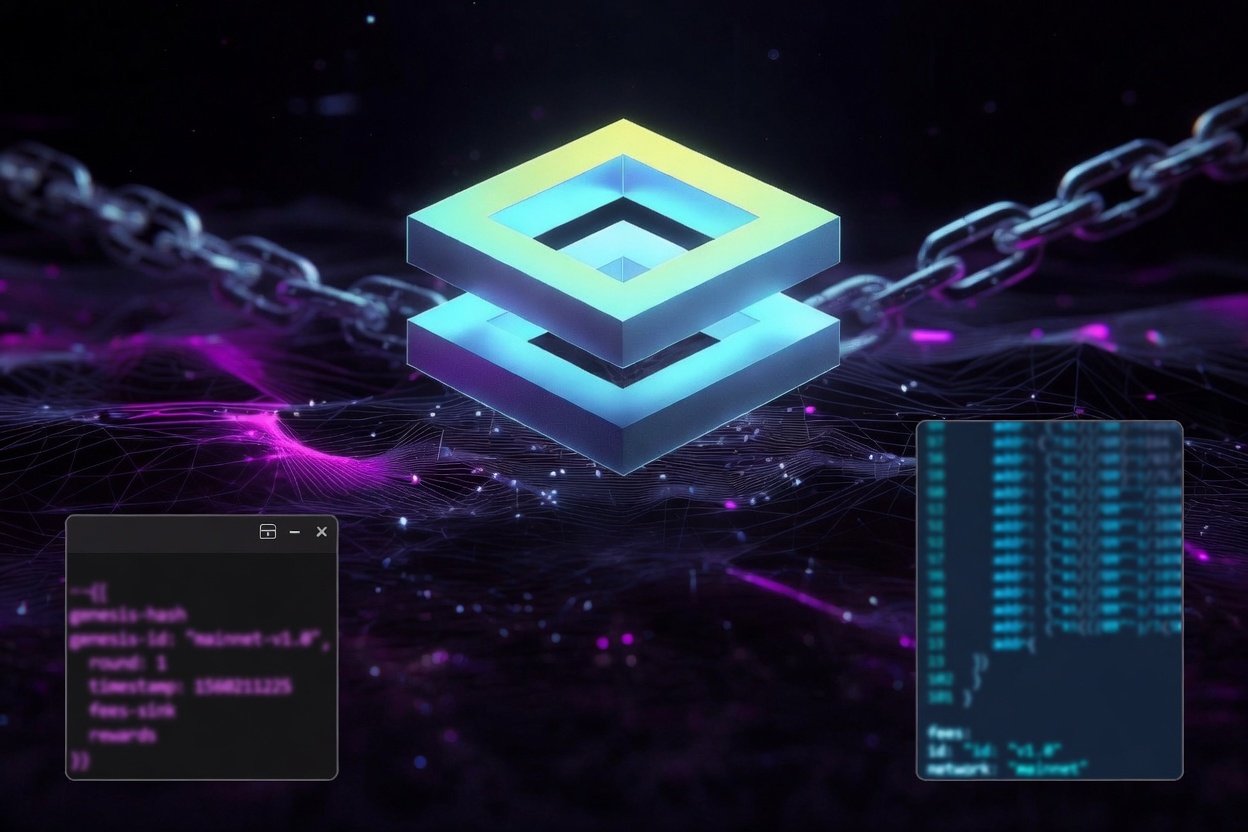
The birthday Algorand never agreed on
For most of its life, Algorand's launch date has been a matter of interpretation rather than record. The team that built the network celebrated June 19 — the day the ALGO supply was first offered to the public through a Dutch auction, a sale format in which the price starts high and drops until buyers clear it. Community sleuths later pointed to the chain's genesis file, the pre-agreed configuration with which the network bootstrapped, which carries a timestamp of June 11, 2019 at midnight UTC. Now D13.co, the independent research outfit behind several widely-cited Algorand fee and security analyses, argues both are wrong: its newest post contends MainNet actually went live on June 12, 2019.
The post — MainNet Archaeology 1: Algorand's Birthday, published on June 12, 2026 as the first installment of a new series — is archaeology in the literal sense: the entire case is built from timestamps already sitting in the ledger, which anyone running a node can re-verify. It is written in a self-consciously satirical register, framing the competing dates as warring factions of an 'Algorand religion', but the evidence underneath is straightforward data analysis. The site itself shows active upkeep — its source repository records 146 commits, the most recent pushed the same day the birthday post appeared.
A clock puzzle in the first 6,637 blocks
Algorand block timestamps are Unix timestamps — seconds elapsed since January 1, 1970 — chosen by the block proposer, the node selected to assemble the next block, within strict consensus bounds: the time difference from the previous block can be no less than zero and no more than 25 seconds. When present, a genesis timestamp acts as a 'block zero' time that constrains what block one may record. MainNet's genesis file sets it to 1560211200, i.e. 2019-06-11 00:00:00 UTC, and it can be pulled from any node — D13 links the public genesis endpoint to prove it.
Here is the anomaly: the first 6,637 MainNet blocks all record the maximum permitted 25-second round times, and only after block 6,638 does the average converge to roughly 4.25 seconds per block and stay there. D13 reads the capped increments as a sign that proposing nodes' real-time clocks were running ahead of the timestamps the chain was recording — consensus forces a proposer whose clock is 'way ahead' to submit the maximum offset. The ledger's clock ran slow at launch, in other words, and the recorded 'June 11 midnight' start is an artifact of that cap rather than the true launch moment.
The reconstruction anchors real time at block 6,638, timestamped 2019-06-12 22:05:29 UTC, and assumes the ~4.25-second average observed after that block also held across the roughly 6,600 rounds before it. Working backward about 28,211 seconds lands on a launch around 2019-06-12 14:15 UTC, give or take a few hours — 10:15 AM in Boston, where Algorand's engineers were based, which the author notes is a more plausible moment to turn on a network than 8 PM on a Monday. The post treats four dates as distinct milestones rather than one disputed day:
| Date | Concept | Real-World Implication |
|---|---|---|
| June 11, 2019 | Genesis timestamp | Acts as block zero, capping how early block one's timestamp may be — not itself the launch |
| June 12, 2019 | MainNet launch, per D13's reconstruction | Network went live around 14:15 UTC; the date D13's countdown site now targets |
| June 15, 2019 | First transactions | Earliest on-chain activity after stabilization; the chain's first real usage |
| June 19, 2019 | Public opening via Dutch auction | The ALGO public sale long celebrated as the birthday |
A vote on the record
The post does not stop at analysis: it opens an on-chain vote. Readers connect a wallet and cast a ballot for one of the four dates — or abstain — with each vote recorded as a transaction. At the time of research, ten votes had been cast: seven for June 12, two for June 11 and one for June 15, with d13.algo itself voting for its author's thesis. The sample is tiny and self-selected, but it doubles as a working demo of how cheaply a wallet-linked opinion poll runs on Algorand — no servers, no ballot infrastructure, just a few hundred bytes per vote.
The conclusion has also retroactively corrected D13's own birthday countdown site, launched for the 2022 anniversary on the strength of the June 11 genesis timestamp. A 2026 update on that page reads plainly: 'We picked wrong — turns out MainNet's birthday is June 12.' The same date now drives the site's countdown to the network's eighth anniversary in 2027, which we covered when the page was updated.
An honest hedge
D13 stops short of certainty: the author calls it an Occam's razor deduction 'not proven beyond reasonable doubt', and the reconstruction rests on one leap of faith — that Algorand never stalled and restarted, and that the post-stabilization 4.25-second average held from the very first rounds. That second assumption cuts both ways: if the earliest blocks actually took longer than 4.25 seconds on average, the back-calculated launch drifts earlier, toward the June 11 time the chain itself records. Readers should also weigh the source's perspective: D13 operates the very birthday project the new date corrects, and its own wallet sits in the June 12 column of the poll it opened — mild self-interest in the outcome, though the underlying data is public and independently checkable by anyone running a node. None of that changes what is verifiable: the ledger records what it records, and the dispute is now about how to read it.
Source
- MainNet Archaeology 1: Algorand's Birthday (D13.co)
- D13.co
- Is It Algorand's Birthday? (D13.co)
- MainNet genesis configuration (Nodely public endpoint)
- Block 6,638 on algo.surf
- d13co/d13.co on GitHub
- Dear Ora: A signable open letter to Ora miners | D13.co
- Preliminary Advisory Report - Algorand 20-02-2023 Thefts | D13.co
Source: https://d13.co/