Algorand Foundation absorbs builder Algorand Technologies, pledges $15M for protocol work
People Round 62,649,630 7 min read 2 reads 2 sources
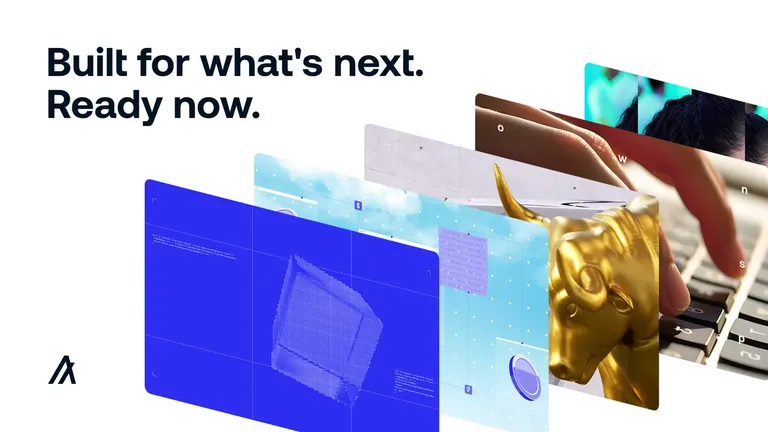
The Builder's Site Answers to a New Owner
A reader landing on algorandtechnologies.com1 today is not met by the company that built the Algorand blockchain. The domain serves the homepage of the Algorand Foundation2 — 'Welcome to Algorand', the tagline 'Built for what's next. Ready now.', and the page's own live counters showing about 9.03 billion ALGO in circulation and roughly 27,600 daily active addresses. Even /publications/, which as recently as August 2025 indexed the company's technology blogs, peer-reviewed papers, and standards proposals, now resolves to the same unified page.
The domain itself carries the company's history: registered in September 2023 when the corporate site moved from algorand.com to the Algorand Technologies brand — a rebrand a November 2023 forum thread had already noted had orphaned the old address from search results. As recently as February 2026, the site described itself as 'We are the builders of Algorand, the high performance Layer-1 blockchain.' That description is now literal in a way its authors could not have intended: algorand.co, algorand.com and algorandtechnologies.com all serve the identical homepage.
The March Merger That Made It So
The redirect is the visible end state of a deal announced on March 19, 2026. The Foundation and Algorand Technologies — the company founded by protocol creator Silvio Micali to build the chain — signed what the Foundation called a 'landmark agreement' consolidating Technologies' intellectual property and its Algorand Protocol development and support activities under the Foundation. The Foundation committed at least $15 million1 in funding for the protocol's technical maintenance, enhancement and support, and all social media handles and marketing assets moved with it. The deal capped the Foundation's transition to a unified, U.S.-based structure following its relocation to Delaware and a new Board of Directors, announced January 14, 2026, with an Ecosystem Advisory Council formed six days later.
'I founded Algorand on the belief that we shouldn't have to accept tradeoffs between security, decentralization, and scalability,' Micali said, adding that unified operations under Foundation leadership 'will greatly help Algorand to deliver on the promise of blockchain.' CEO Staci Warden framed it as completion rather than ambition: 'This agreement completes our strategy to create a unified powerhouse for blockchain innovation here in the United States.' Third-party outlets read the deal the same way, describing a merger into a single Delaware entity in which a non-profit now controls the core codebase.
The organizational tradeoff deserves equal billing. Protocol upgrades still require approval from a 'vast majority of consensus participants,' as the release put it — but development, intellectual property, and ecosystem marketing now sit under one steward, and that steward is itself a major staker: the Foundation's own March report put its share of staked ALGO at 19.5%, against 80.5% held by the community. One entity now sets the technical roadmap that node operators are asked to ratify.
The Team Moved With the Assets
Personnel followed the paperwork. Five engineers joined the Foundation from Algorand Technologies, led by Chris Peikert, previously Head of Cryptography at the company and now Chief Scientific Officer — a University of Michigan professor and IACR Fellow whom the Foundation describes as a 'global leader in lattice-based and post-quantum cryptography' and the architect of its post-quantum implementations. John Jannotti became Senior Vice President of Protocol Engineering, with Pavel Zbitskiy as Principal Protocol Engineer and John Lee as Director of Protocol Infrastructure; Bruno Martins, promoted in March, serves as CTO. The continuity is visible in the code: the go-algorand repository shows commits dated the day of this writing, including a fix to smart-contract budget accounting authored by a contributor logged under the handle 'jannotti'.
The Unified Pitch: Quantum First
The consolidated homepage stacks four pitches — post-quantum resilience by the end of 2027, 'commerce, run by agents', institutional-grade DeFi, and real-world-asset tokenization — and the first is the one with a deadline attached. The stakes are concrete: almost all of today's crypto security rests on elliptic-curve math that a sufficiently powerful quantum computer could break, a threat researchers describe as 'harvest now, decrypt later' — hostile actors record signed or encrypted data today to crack it decades from now. Algorand's answer began in 2022 with State Proofs, compact quantum-resistant snapshots produced every 256 rounds and signed with Falcon, a lattice-based scheme selected by the US National Institute of Standards and Technology, that anchor the ledger's entire history back to genesis. In 2025 the network carried its first post-quantum mainnet transaction. Chief Scientific Officer Chris Peikert framed the urgency: 'Migrating a live protocol takes years, and the probability of a quantum attack on legacy cryptography grows meaningfully as the end of this decade approaches.' The roadmap turns those foundations into user-facing features:
| Concept | Real-World Implication |
|---|---|
| Native post-quantum accounts (Q3 2026) | Ordinary users and developers hold and transact from Falcon-secured addresses, with SDK tooling and Pera wallet account creation — previously a quantum-resistant account had to be hand-assembled from a LogicSig (a stateless program), now it is a first-class account type |
| PQ multisig (2027) | Institutions, treasuries and high-value operations get multi-party post-quantum signatures; the Foundation plans to migrate its own treasury onto post-quantum accounts and let stakers stake from them |
| PQ-resilient VRF and consensus signatures (2027) | Research into post-quantum randomness and consensus messaging, extending protection from user accounts to the protocol's core — the layer that decides who proposes the next block |
The first milestone is already at the door. Go-Algorand 5.0.02, released August 12, crossed the 90 percent node-support threshold on August 15 and, after a mandatory 208,000-round (roughly seven-day) cooldown, is expected to activate on mainnet around August 22 — the largest protocol upgrade since staking rewards landed in January 2025 and the first deliverable of the June roadmap. It brings native Falcon-1024 account signatures, per-byte fee pricing for larger transactions, a doubled smart-contract size cap, and AVM v13. The network was live and producing blocks at the time of writing.
Commerce, Run by Agents — and Who Pays the Prize
The second pillar is x402, the pay-per-request standard the Foundation is seeding through its Global x402 Challenge: developers turn an API endpoint into a service that AI agents pay for directly on-chain, bypassing API keys, billing systems and intermediaries. The challenge, which opened in mid-July with volume measured over unannounced windows in October, offers $100,000 USD plus 500,000 ALGO; the top 50 endpoints feed 10 finalist slots at Devcon 8 India, with $25,000, $22,500, $20,000, $17,500 and $15,000 for first through fifth, and the top 20 sharing the ALGO pool.
One incentive deserves a reader's attention: half the prize pool is denominated in ALGO, the Foundation's own token, and the Foundation both organizes the contest and stewards the payment rail it showcases — the volume windows reward precisely the activity the Foundation markets. That is not a knock on the mechanics; the challenge has real, if early, traction, with 60 live paid endpoints and roughly $19,800 settled as of this outlet's mid-August coverage. But the structure means the Foundation's marketing budget and its token's visibility rise together, and contest-driven volume should be read as such.
What to Watch
The homepage's headline numbers deserve the same scrutiny. The 10,000+3 transactions per second and 'zero network downtime in more than seven years' claims are the Foundation's own counters, not independently audited. The Foundation's March analytics report offers a fuller picture of the network the unified entity stewards: monthly active wallets up 22.6 percent to 531,0004, cumulative transactions past 3.51 billion. Total value locked fell 7.5 percent to $70 million5 in the month, while stablecoin market cap rose 26.3 percent6 to $64 million7 — capital repositioning more than withdrawal, the report argues. Outside validation has arrived on the security front: a Google Quantum AI whitepaper cited Algorand 32 times, more than any other chain besides Bitcoin and Ethereum, and SEC guidance on March 17 classified ALGO as a digital commodity.
The homepage's ecosystem proof-points — YC-backed Lofty's $508 real-estate shares, HesabPay's aid payments with WFP and MercyCorps, Folks Finance's lending suite, Mann Deshi's credit scorecards for rural Indian women, Enel's fractional solar and wind ownership — are the Foundation's own portrayals of its partners. They are marketing texture, not audited performance, and should be read as the pitch they are. The substance is the organizational fact: for the first time, the people who write Algorand's code, own its intellectual property, and set its ecosystem strategy are the same people. Whether that concentration serves the network will be tested by the upgrades the newly unified team ships — starting with the one activating this week.
Source (7)
- algorandtechnologies.com
- prnewswire.comUnification announcement (PRNewswire, March 19, 2026)
- prnewswire.comPost-quantum roadmap announcement (PRNewswire, June 18, 2026)
- algorand.coFoundation protocol-engineering team announcement
- github.comgo-algorand on GitHub
- algorand.coMarch 2026 Algo Insights Report
- algorand.coAlgorand Foundation Announces Post-Quantum Security Roadmap, Targets Broad Quantum Resilience by 2027
Sources (2)
- 1 algorandtechnologies.com algorandtechnologies.com Cited in the text ↩
- 2 algorand.co Algorand Foundation Cited in the text ↩
Further sources
- algorandtechnologies.com algorandtechnologies.com/publications
- prnewswire.com Unification announcement (PRNewswire, March 19, 2026)
- prnewswire.com Post-quantum roadmap announcement (PRNewswire, June 18, 2026)
- algorand.co Foundation protocol-engineering team announcement
- github.com go-algorand on GitHub
- algorand.co March 2026 Algo Insights Report
- algorand.co Algorand Foundation Announces Post-Quantum Security Roadmap, Targets Broad Quantum Resilience by 2027