Algorand's post-quantum v5.0.0 nears mainnet after 90% node-support vote
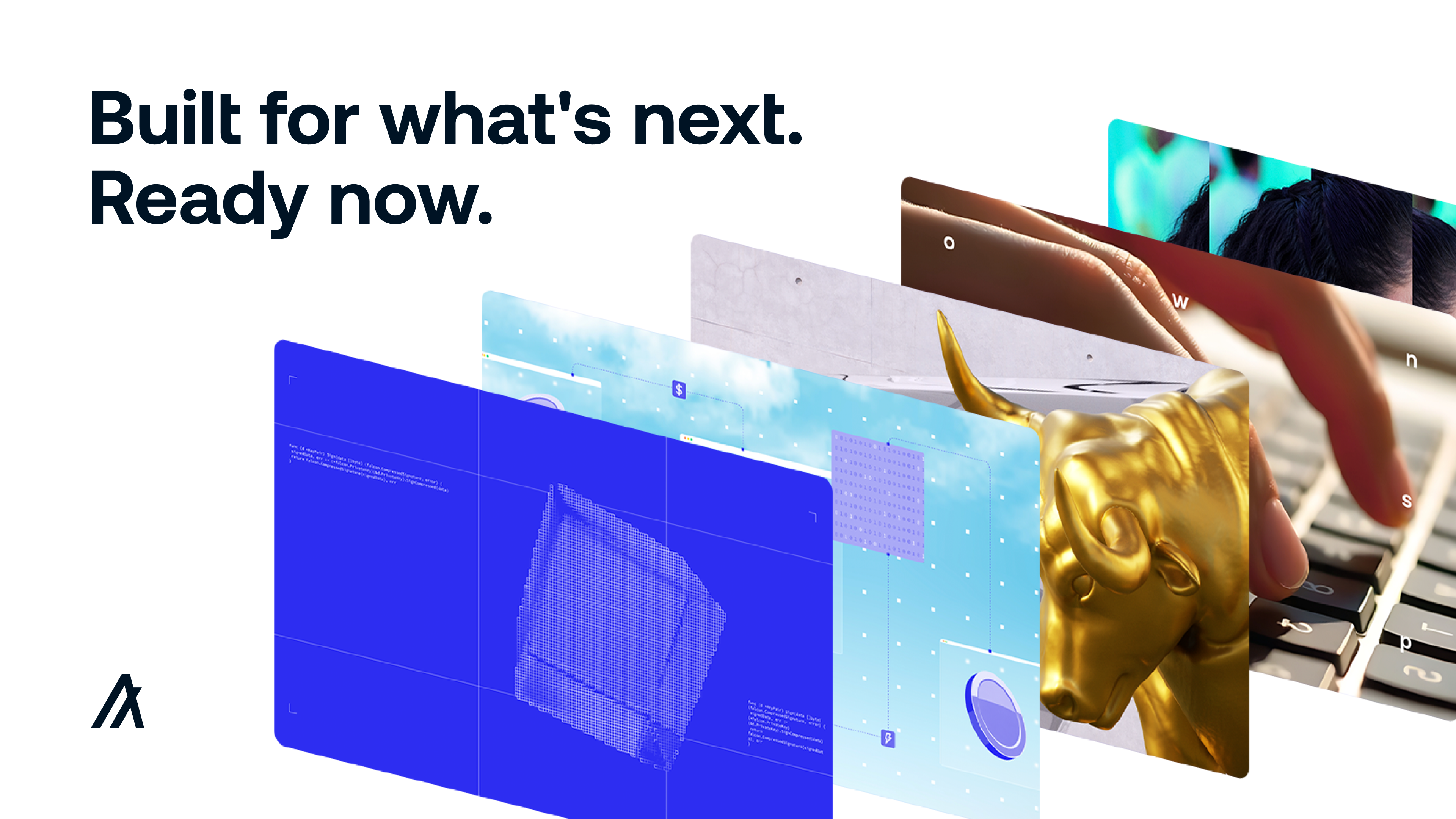
'Built for what's next' — and the vote that answers it
algorand.co, the Algorand Foundation's front door, greets visitors with 'Built for what's next. Ready now.' and asks 'Are you ready?' The question is being answered this week by the network itself. Go-Algorand 5.0.0 — the largest protocol upgrade since staking rewards launched in January 2025 — was released Aug 12, cleared the 90% node-support threshold on Aug 15, and is finishing a mandatory 208,000-round cooldown, roughly seven days, before mainnet activation expected around Aug 22. In the Foundation's confirmation: 'The v5.0.0 upgrade reached the needed 90% support threshold on August 15. It will go live on mainnet after a mandatory 208,000 round (~7 day) cooldown period.'
That supermajority is effectively an operator ballot, not a Foundation decree: Algorand's upgrade mechanism collects votes from participating nodes over a window and requires a supermajority, so a release becomes live consensus rules only when enough of the fleet runs it. It is also self-reported — the 90% figure comes from the Foundation's own tally of that process, with no independent census of node adoption published alongside the announcement.
The release is the first deliverable of the post-quantum roadmap the Foundation published in June, and its three parts hang together: native Falcon-1024 accounts, a fee model that prices what a transaction actually contains, and a materially bigger smart-contract environment. The middle change is the key to the other two — none of this was shippable under the old flat fee.
Native post-quantum accounts, and the price of size
Almost all crypto security today rests on Ed25519 signatures, elliptic-curve math unbreakable by classical computers but vulnerable in principle to a sufficiently powerful quantum machine running Shor's algorithm — the 'harvest now, decrypt later' risk that data recorded today gets cracked decades from now. Algorand's answer has been staged: State Proofs signed with Falcon, a NIST-selected lattice-based scheme, have anchored the chain's history back to genesis since 2022, and the network ran its first post-quantum mainnet transaction in 2025.
Until v5.0.0, a quantum-resistant account had to be assembled from a LogicSig — a stateless smart-contract program that bakes Falcon verification into the account's rules. It worked, but as the Foundation's own developer blog concedes, it required bundling multiple transactions and impeded composability with DeFi protocols that need their own transaction-group slots, and most wallets shunned the approach. Native support makes Falcon-1024 a first-class way to authorize an account, on the same footing as Ed25519.
The mechanics matter because of the size. A Falcon-1024 public key is 1,793 bytes against a 32-byte address, so the address is derived as a hash — SHA512_256 of a domain separator, a scheme identifier, a one-byte salt and the public key — and the key itself travels inside each transaction rather than bloating the ledger. The salt, chosen over up to 256 tries, guarantees the resulting address is not a valid point on the Ed25519 curve, so no classical private key can ever correspond to it; a quantum attacker has nothing to sign against it.
The honest tradeoff: Falcon keys are more than 50 times the size of an Ed25519 public key and about 20 times its signature, cannot be batch-verified like Ed25519, and are what the new fee model charges for — three minimum fees per post-quantum transaction. And the upgrade does not make Algorand quantum-proof. Consensus itself — block proposal and voting — still runs on Ed25519; a post-quantum VRF research paper is not due until early 2027; hardware wallets are not Falcon-capable in this release. The Foundation's own post says no system is ever completely future-proof, and the industry's quantum timeline is debated — the Foundation's target of broad resilience by end-2027 lands three years ahead of the NSA's migration goal, which is precisely the argument for moving now.
Fees that price what you use — and a debate about whether it's enough
The fee model is the load-bearing piece. Under the new rules, the network's effort per transaction is 'usage', a fixed-point multiplier on the minimum fee: an ordinary transaction has usage 1,000,000 and pays one minimum fee; a Falcon-authorized transaction adds 2,000,000, three in total; oversized fields are surcharged at one ten-thousandth of a minimum fee per byte. SVP of Protocol Engineering John Jannotti's compatibility promise is explicitly scoped: 'No transaction that is legal today will cost more under these new rules' — the free allowances for notes, arguments, programs and LogicSigs are all at least what they were, and surcharges start only beyond them. The Foundation frames the revenue as a first step toward a self-sustaining network, with the extra fees flowing into the sink that pays node runners.
| Concept | Real-World Implication |
|---|---|
| Note field: 1,024-byte free allowance, 4,096-byte new limit | A maximum-length note rises from 1,000 to 1,308 microAlgos (+0.31 minimum fee) |
| Application arguments: 2,048-byte free allowance, 16,384-byte new limit | Complex app calls can carry far more data for at most +1.43 minimum fees |
| Application programs: 8,192-byte free allowance, now 16,384 | Extra pages beyond the old cap are buyable for at most +0.82 minimum fees |
| LogicSig: 1,000 bytes per transaction pooled across a group, now 16,000 | A 16-KB program costs about 2.5 minimum fees in one transaction instead of padding a group with fifteen dummies |
Whether that is enough is contested. The network-sustainability debate has run on the Algorand Forum all year under the banner of the upcoming 'King Safety' paper. A long-running critic, Maugli, summarized the mood in April: 'The technology is good. The economics are broken.' Builder Ludo (scholtz) argued in August that fee revenue cannot match roughly 154M ALGO sold from two tracked Foundation addresses over the past year, even on generous throughput assumptions. V5.0.0 sidesteps that fight — it raises nothing on transactions legal today, while quietly installing the machinery a future congestion charge would need: block headers now carry a Load value, and a CongestionTax modeled on EIP-1559 is measured and ignored for now.
A bigger toolkit, financed by the same model
The usage-based pricing is also what makes the developer features shippable. The smart-contract program ceiling doubles from 8,192 to 16,384 bytes, and — critically — the page count is no longer frozen at creation: an application can grow in place, keeping its ID, address and state, with a new SizeSponsor field deciding who carries the minimum-balance obligation for the extra pages, readable via app_params_get. Box storage, previously private per app, can be shared under two opt-in flags — ForeignBoxReads for reads, FamilyBoxAccess for read-write among apps with a common creator — with the protocol re-closing the re-entrancy hazard that shared mutable state would otherwise reopen. AVM v13 adds full SHA-512 and poseidon2, an arithmetization-friendly hash suited to zero-knowledge proofs, and the long-deprecated dryrun endpoint and tealdbg tool are removed in favor of simulate.
Operators have homework: Indexer v3.10.0 and Conduit v1.10.0 were published Aug 10 specifically to support the new consensus, and both must be upgraded to stay on the network once the cooldown ends. NodeKit users run ./nodekit upgrade, which from v1.1.0 also updates NodeKit itself; FUNC Program installs update automatically. Nodely's telemetry counted about 2,661 full-time mainnet nodes on Aug 19, down from a 2,683 peak on release day — a fleet mid-rollover.
The second front: paying agents with x402
The same infrastructure thesis drives the site's other big push, agentic commerce. x402, the Machine Payments Protocol, repurposes HTTP's dormant 402 status code so payment lives inside the request-response cycle — an AI agent requests a resource, the server answers with 402 plus structured payment requirements, the agent settles a USDC transfer on-chain and retries with proof. No API keys, no billing accounts — in the Foundation's phrasing, 'no keys, no billing, no checkout'. Algorand's fast finality and sub-cent fees are the settlement layer the standard needs.
The Global x402 Challenge, open since mid-July, puts $100K USD plus 500K ALGO on top of that: developers turn API endpoints into paid services, drive real volume through the GoPlausible x402 facilitator settling USDC on Algorand, and rank by volume measured over unannounced October windows, with ten finalists presenting at Devcon 8 in Mumbai, Nov 3–6. The facilitator's own leaderboard showed 101 entries and roughly $278.7K in total volume this week, nine-tenths of it from a single developer-tools endpoint — an honest picture of how early the market is.
The conflict of interest deserves naming. The challenge is a Foundation-funded promotional program whose documentation is the Foundation's own blog, and ranking — and therefore prize eligibility — depends entirely on GoPlausible's accounting. The underlying USDC transfers are real, verifiable on-chain transactions, but attribution and leaderboard totals are computed by a third-party facilitator with no independent audit surfaced in this research, a counterparty that also sells Algorand agent tooling. A team whose business model is a paid endpoint concentrates its revenue visibility in that one service.
The foundation, not the finish
What ships this week is the first deliverable of a longer march: Falcon-512 by year's end, post-quantum multisig by end-2026, a PQ VRF research paper in early 2027, and then the hard part — migrating consensus itself. The homepage's 'Are you ready?' is, for once, answerable with evidence: the operator fleet voted with its feet, and the ledger now treats a post-quantum signature as a first-class citizen. The honest version of ready is the one the Foundation itself gives — the foundation is laid, and the roof is still under construction.
Source
- Algorand
- Go-Algorand v5.0.0 release
- Algorand v5.0.0 is here. Here's what it means for you
- Getting ahead of the (elliptic) curve: what's in the next consensus upgrade
- Algorand Post-Quantum Cryptography Roadmap
- Enhancing on-chain flavor in Algorand 5.0 — Part 1: Salt
- Algorand v5.0.0 has arrived: how to upgrade
- The Global x402 Challenge is live
- x402 Facilitator leaderboard
- Devcon 8 — Mumbai
- Nodely network telemetry
- Algorand Forum
- Algorand Post-Quantum Ledger
- Algorand newsroom
- Algorand Metrics Portal
- Algorand Foundation Announces Post-Quantum Security Roadmap, Targets Broad Quantum Resilience by 2027
- Devcon 8 Tickets Are Live: Find Your Path to Mumbai | Ethereum Foundation Blog
Source: https://algorand.co