Folks Finance Academy teaches crypto from zero with quizzes in three languages
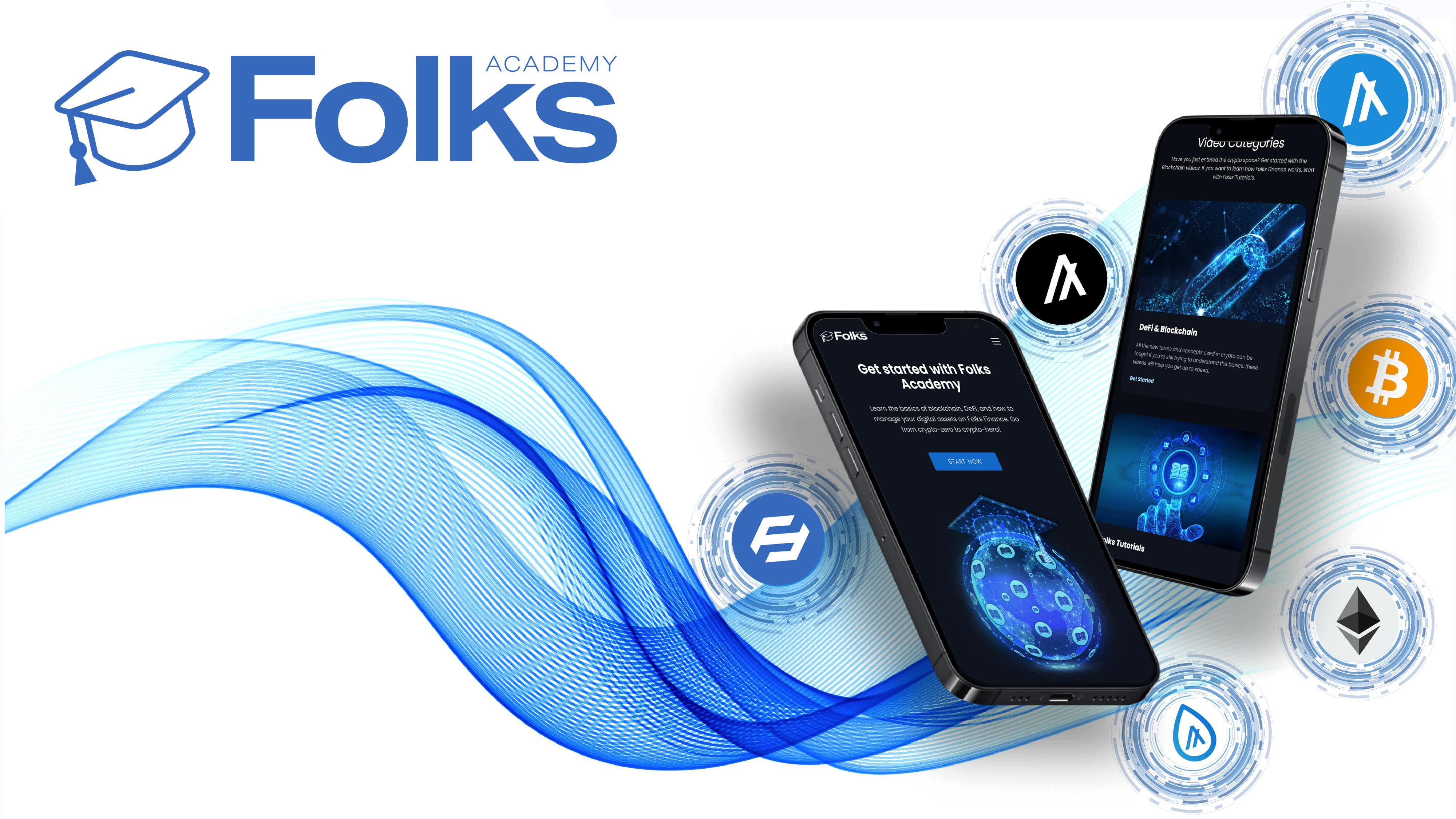
The hardest part of crypto is rarely the transaction — it is the first hour, staring at a page full of words like 'collateral', 'LTV' and 'borrowing pools' that assume you already know what they mean. Folks Finance, the lending protocol that went to mainnet on Algorand in 2022, built a tool aimed squarely at that moment of confusion: a free online school, live since May 2023, at academy.folks.finance, with the stated mission of taking a learner 'from crypto-zero to crypto-hero.'
The Academy is a library of short video lessons — none longer than about four and a half minutes — each paired with a quiz and a transcript. The homepage frames the path in three steps: watch videos, take quizzes, then start practicing on Folks Finance itself. That last step is the point. The school is the education layer of a protocol that has grown from Algorand-native lending into a network spanning eight EVM chains plus its Algorand home, with its own FOLKS token launched in November 2025 — a funnel that runs from 'what is a blockchain?' to a connected wallet and a first deposit. It is not a neutral public service; its purpose is onboarding, and knowing that shapes how you read the curriculum.
Two tracks, from the ledger to the dApp itself
The curriculum splits into two categories. The DeFi & Blockchain track teaches the foundations the protocol is built on; the Folks Tutorials track walks through operating the platform itself. The distinction is deliberate — the site directs newcomers to the basics first, and to protocol tutorials once comfortable. Lesson pages carry a level tag (the blockchain lesson is marked 'beginner'), and the tutorial track has kept pace with the product's own arc: beside wallet-creation and deposit guides sit tutorials on xChain, the cross-chain lending product, and xPortal, the tool that moves FOLKS between chains without wrapping it.
| Concept | Real-World Implication |
|---|---|
| DeFi & Blockchain track: 'What is a blockchain?', 'What is DeFi?', 'Smart Contracts 101 and 102', 'What is Liquid Staking?' | A newcomer absorbs vocabulary and safety habits before any real money is at stake |
| Folks Tutorials track: 'Creating an Algorand Wallet', 'Connecting your Wallet to Folks Finance', 'Basic Loan Management', 'xALGO Tutorial', 'Folks xPortal Tutorial' | The gap between theory and operating the dApp is closed click by click — from wallet creation to borrowing to staking |
Why the practice step is cheap on Algorand
Three protocol properties make the third step more than a slogan. Algorand produces a block roughly every three seconds with single-block finality — a transaction is final the moment its block is produced, with no multi-block confirmation window — and the base fee is negligible, about 0.001 ALGO. For a learner, that means an experiment costs nearly nothing and its outcome appears immediately: a deposit or even a liquidation resolves in seconds, not after minutes of confirmations. Staking is part of the same loop: xALGO is Folks' liquid-staking wrapper, where a user locks up ALGO and receives a tradable token representing the staked amount plus accruing rewards, so the capital stays usable instead of being locked until unstaking.
The stakes are real, because Folks is non-custodial — the protocol's own footer states it is 'not a financial or payment service,' and users hold their assets in wallets like Pera or Defly, which the tutorial track teaches from step one. The same footer cautions that terms like 'loan', 'debt' and 'collateral' are used 'only as a basic reference, without any effective or legal meaning' — the product itself concedes its vocabulary is a simplification. The lesson 'Protecting Crypto Assets: Self-Custody vs Centralized Exchanges' is therefore not a generic PSA but a description of the model the platform actually runs on. DeFiLlama currently puts Folks' total value locked — the sum of assets deposited in its contracts — at roughly $49 million (API data), most of it on Algorand.
How a lesson works
Each lesson page shows a description, length, category and full transcript, and opens with a 'Take Quiz' button. The quizzes are four questions long, testing whether the video actually landed: the blockchain quiz opens by asking what Bitcoin, Ethereum and Dogecoin all run on, with 'Blockchain Technology' among three choices. The homepage says quiz results let learners 'track your level,' though nothing on the site shows what that tracking looks like in practice.
At launch, the quiz carried a real incentive: learners could screenshot results and upload them to Zealy, the quest platform, earning points toward the Folks community leaderboard — a gamification loop that served the protocol's community growth as much as the learner's progress. Whether that loop still runs is not mentioned anywhere on the current site. The Academy was also anticipated before it existed: a Folks forum user in April 2023 noted the team had floated the idea in an interview, comparing the concept to Binance Academy.
Three languages, one unverifiable audience
The Academy ships in three languages — English, Italian and Spanish — via a selector that routes to dedicated /it and /es paths, each localized down to the cookie banner. What it does not publish anywhere is reach: no usage counters, no learner counts, no completion statistics. A search of Bluesky and the Folks forum turned up no current discussion of the Academy, and the lessons themselves are hosted on YouTube, where view counts are public but were not independently verified for this piece.
What can be verified is continuity. Wayback Machine captures of the Academy run back to its launch month and continue through April 2026, and the March 2024 snapshot shows the same three-step structure as today's homepage; the footer still carries a 2026 copyright. The school requires no wallet to browse and remains maintained — a genuinely useful thing for an ecosystem whose first-time-user problem this Academy exists to solve. Three years in, how many people it has reached is the one fact only Folks itself could disclose.
Source
- Folks Finance Academy
- DeFiLlama protocol API — Folks Finance
- 'Launching Folks Academy' — Folks Finance on Medium, via Wayback Machine
- Folks Finance Academy
- Folks Finance Academy
- Folks Finance Academy
- Ultraswap Overview - Folks Finance Academy
Source: https://academy.folks.finance/